
Most weight loss advice online was written for someone else's kitchen. Quinoa bowls, kale smoothies, salmon fillets: lovely, but that is not what dinner looks like in Faisalabad, Lahore, or a Pakistani household in Dubai. So people try these foreign plans, last eleven days, and conclude that they have failed. They have not failed. The plan failed them.
As a weight loss dietitian, my starting position is simple: a diet plan for weight loss only works if you can follow it for months, and you can only follow it for months if it is made of food you already love. This article walks through how a realistic Pakistani diet plan for weight loss is structured, what a sample day looks like, and the habits that quietly decide whether the scale moves.
Why crash diets keep failing you
Every rapid weight loss story you have heard has a sequel nobody tells: the regain. When you slash calories dramatically, your body loses water and muscle along with some fat, your hunger hormones surge, and your metabolism adapts downward. The moment normal eating resumes, weight returns, often with interest. This cycle, repeated over years, makes each new attempt harder.
Sustainable weight loss is slower and far less dramatic: roughly half a kilogram to one kilogram per week for most adults. Over a two-month program that is a realistic 6 to 9 kg, and over four months, 12 to 18 kg, depending on your starting point, hormones, sleep and consistency. Slower, yes. But it is loss you keep.
Rule of thumb: if a plan cannot survive a wedding, a work trip, and one lazy Sunday, it is not a plan, it is a countdown to quitting. Build for real life from day one.
The plate method, desi edition
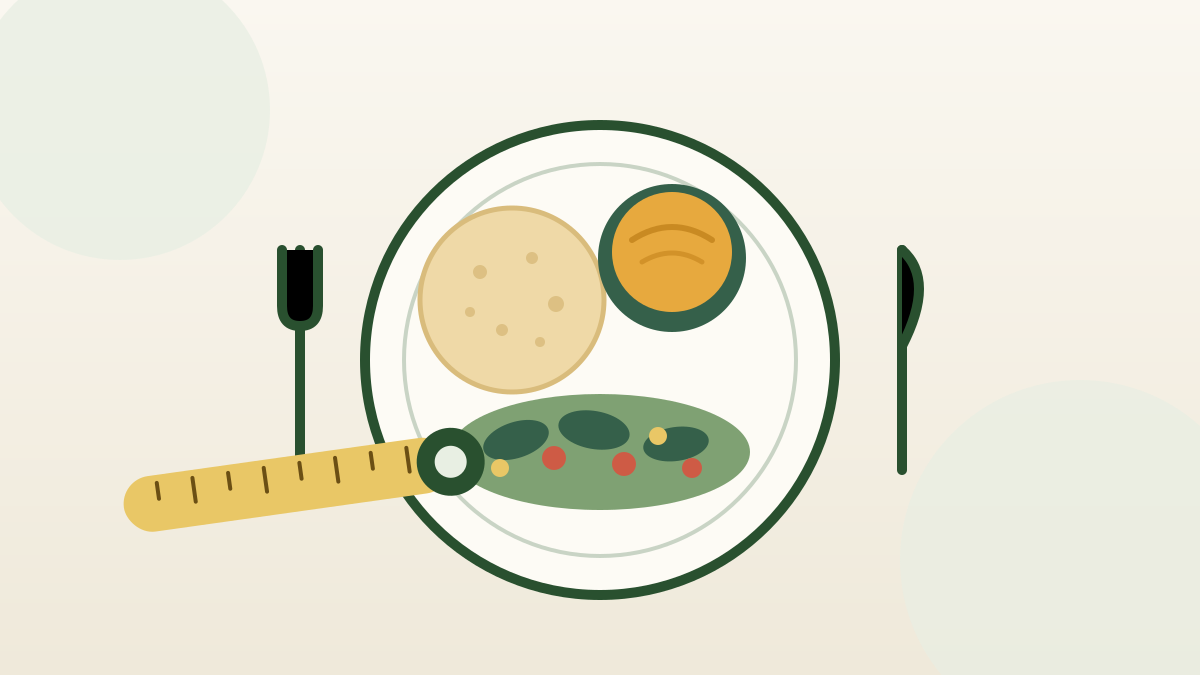
Forget weighing every grain of rice. The simplest structure that works for Pakistani meals is the plate method:
- Half the plate: sabzi or salad. Bhindi, karela, palak, mixed sabzi, kachumber, raita-dressed salad. Volume, fibre, and vitamins that keep you full.
- A quarter of the plate: protein. Daal, chana, lobia, chicken, eggs, fish, or paneer. Protein protects your muscle while you lose fat and controls hunger better than any supplement.
- A quarter of the plate: carbohydrate. One medium roti, or a controlled serving of rice. Not both at the same meal, most days.
Nothing here is exotic. The change is in proportions: most of us currently eat this plate inverted, with carbohydrate occupying half the plate and sabzi squeezed into a corner.
A sample day on a Pakistani weight loss plan
| Meal | Example |
|---|---|
| Breakfast | 2 eggs any style with 1 roti or 2 slices of brown bread, plus chai with less sugar (or none) |
| Mid-morning | 1 fruit: apple, guava, orange, or a small banana |
| Lunch | Daal or chicken salan (1 to 1.5 cups) with 1 medium roti and kachumber salad |
| Evening | Chai with 1 rusk, or a handful of chana, or yogurt |
| Dinner | Sabzi or grilled protein, half plate of salad, 1 roti; finish 2 to 3 hours before bed |
This is an illustration, not a prescription. Your ideal portions depend on your age, weight, activity, and medical profile, which is exactly why a personalized diet plan from a qualified professional outperforms anything you can print off the internet. If you have a condition like diabetes, thyroid disorder or PCOS, portions and timing change further, and that adjustment is the job of a clinical dietitian.
The habits that decide everything
Chai, but honestly
Nobody in Pakistan is giving up chai, and no honest dietitian will ask you to. But count it: three cups a day with two teaspoons of sugar each is over 100 sugar calories daily, more than 3 kg of potential fat over a year. Halve the sugar, keep the chai, keep your sanity.
Cooking oil is the invisible meal
Many home-cooked "healthy" dishes swim in oil. A tablespoon has around 120 calories, and a generous salan can hide four or five of them per serving. Measure oil with a spoon rather than pouring, and you remove hundreds of calories a week without changing a single dish.
Protein at every meal
The most common gap I see in Pakistani diets, especially for women, is protein: breakfast is paratha, lunch is rice with a little salan, dinner is roti with sabzi. Almost no protein all day, then constant hunger and cravings. Anchor each meal with eggs, daal, chana, yogurt, chicken or fish and watch your snacking drop on its own.
Sleep and stress are diet decisions
Sleep deprivation raises hunger hormones and makes the body cling to belly fat. If you are targeting belly fat loss specifically, know this: no food burns belly fat directly, whatever the internet claims. What works is overall fat loss through consistent eating, movement, sleep, and stress management, and your waistline follows.
Move, but do not punish yourself
A daily 30 to 40 minute walk changes more than most gym memberships that end in February. If you enjoy structure, guided sessions help: our online workout sessions run five days a week on Zoom, from home, at three different time slots.
Eating out, weddings, and other real life
A weight loss plan that bans social life will be abandoned at the first shaadi. Instead, use the 80/20 principle: eat according to plan 80 percent of the time, and enjoy occasions without guilt the other 20 percent. Practical tactics for a wedding dinner: eat a light protein-rich snack before you go, fill your first plate with salad and grilled items, take a small portion of the dish you really want, and skip the dishes you can eat any day. One evening never ruins progress. The all-or-nothing mindset does.
When to get professional help
You can absolutely start with the plate method and the habits above. Consider working with a dietitian for weight loss if:
- You have tried repeatedly and regained each time
- You have PCOS, thyroid issues, diabetes, high cholesterol or fatty liver
- You have more than 10 kg to lose and want a structured, supervised program
- You are postpartum, or preparing for your wedding on a deadline
- You simply want accountability: weekly tracking, adjustments, and someone to answer questions
A good online diet plan in Pakistan today includes exactly that: assessment, a customized plan around your food, weekly progress tracking, and plan revisions when life changes. That is how our weight loss challenges and diet plans are structured, whether you are in Faisalabad or joining online from anywhere in the world.
The bottom line
Weight loss in Pakistan does not require imported ingredients or heroic willpower. It requires your own food in better proportions, protein at every meal, honest accounting of chai and oil, sleep, walking, and a pace slow enough to keep. Boring advice, extraordinary results, because it is the only kind that lasts.
Frequently asked questions
Can I lose weight while still eating roti and rice?
Yes, and you should. Roti and rice are not the enemy; unmeasured portions are. One medium roti has roughly 100 to 120 calories, which fits comfortably into any weight loss budget when the rest of the plate is sabzi and protein. Plans that ban staple foods have the highest failure rate of all, because nobody sustains a diet that fights their culture. Keep the staples, fix the proportions, and choose either roti or rice at a meal rather than both.
How many kilograms can I safely lose in one month?
For most adults, two to four kilograms a month is a safe, sustainable pace, sometimes a little more in the first month as water weight shifts. Faster loss usually costs muscle and rebounds. Hormonal conditions like PCOS or hypothyroidism slow the pace further, which is normal and not a failure. Judge progress over eight to twelve weeks, not day to day, and use photos, measurements and energy levels alongside the scale.
Which Pakistani foods help with belly fat loss?
No single food burns belly fat, whatever a reel claims about lemon water, green tea or apple cider vinegar. Belly fat responds to overall fat loss: a modest calorie deficit built on daal, sabzi, lean protein and controlled roti or rice, daily walking, proper sleep, and managed stress. The foods that help most are simply the ones that keep you full on fewer calories, which is why protein and fibre do more for your waistline than any special ingredient.
Should I skip dinner to lose weight faster?
Skipping dinner usually backfires: hunger builds, night snacking creeps in, and the next day starts with cravings. A better pattern is an earlier, lighter dinner, finished two to three hours before bed, built around sabzi or protein with one roti. If a form of intermittent fasting appeals to you, it can work when it fits your routine, but it is a scheduling tool, not magic. Total intake over the week still decides the result.
Do I need a personalized diet plan, or can I follow a free one online?
A free generic plan can work for a healthy adult with simple goals and no medical conditions. Consider a personalized diet plan when you have PCOS, thyroid issues, diabetes or another condition, when you have repeatedly lost and regained, or when you want accountability with weekly tracking and adjustments. Personalization is not about fancier food; it is about a plan shaped to your body, schedule, budget and kitchen, which is exactly what makes it stick.

Founder of Eat Without Guilt. Personalized nutrition for weight management, PCOS, pregnancy and postpartum, online worldwide and in-clinic in Faisalabad.
This article is general information, not personal medical advice. Calorie and weight figures are typical ranges; individual results vary. Consult your doctor before starting any weight loss program, especially with a medical condition.